
The world of sport has changed.
A jersey is no longer just a garment. It has become identity, revenue, storytelling, community and, increasingly, a digital touchpoint.
Across the industry, leading teams, leagues and federations are rethinking how they connect with fans. Performance on the field still matters, but it is no longer the only measure of success. Every interaction, from matchday to merchandise, now plays a role in shaping how supporters feel about the organizations they follow.
What sets the most successful sports organizations apart is not a single initiative or technology. It is a more holistic view of fan experience, and a deeper understanding of fan expectations. One that connects product, retail, digital engagement and operations, while keeping complexity under control.
Performance that earns trust
At the foundation of any strong fan experience is trust. Fans expect official products to look right, feel right and perform consistently, whether they are worn by players on the pitch or purchased by fans around the world.
For leading clubs and leagues, this means setting uncompromising standards for quality and consistency. Names, numbers and embellishments must withstand elite competition, global distribution and repeated wear, while maintaining a unified visual identity season after season.
This becomes even more critical at scale. League-wide programs demand predictability across every club, every kit and every retail environment. Consistency is not just a design requirement. It is a brand promise.
That kind of reliability does more than protect brand integrity. It creates confidence internally and externally, making it possible for organizations to push further and think differently about how products and experiences can evolve.
“What impressed us most was predictability. Every club, every garment, the result is the same. That level of trust is rare.”
Bernardo Azevedo
General Manager at Liga Portugal
Turning apparel into a connected platform
A jersey is one of the most personal objects in sport.
Increasingly, it is also becoming one of the most intelligent.
Clubs and leagues are under growing pressure to understand their fans better and to deliver engagement that feels personal rather than transactional. At the same time, they are navigating more complex retail and distribution environments, where operational efficiency directly affects the fan experience. American sports organizations have shown what is possible when data, product and experience are connected, and the global game is moving quickly in that direction.
Many leading organizations are now treating apparel as a platform rather than a static product. By embedding connectivity into official branding elements, they are creating new touchpoints that link physical merchandise with digital engagement and operational insight across the entire product lifecycle.
NFC-enabled elements allow fans to interact directly with official products, unlocking content, campaigns and experiences through the garment itself. Connected apparel is also beginning to reshape how commercial teams think about sponsorship value. Sponsors are increasingly looking to move beyond passive logo exposure toward activations that demonstrate relevance and impact. Historically, physical assets such as jerseys have been difficult to link to digital campaigns or post-match engagement. Embedded connectivity starts to bridge that gap, allowing official products to act as entry points for sponsor-led experiences and content that extend beyond matchday, while elevating the fan experience
Alongside fan engagement, operational performance remains critical. RFID technology supports visibility, traceability and accuracy, helping teams and retail partners manage inventory more effectively across physical and digital channels.
That visibility becomes most valuable when it is translated into accurate inventory intelligence. Solutions such as Clear Count support real-time accuracy across retail operations, improving product availability, reducing friction and enabling better decision-making. When inventory performs well behind the scenes, fans experience it simply as consistency, speed and availability.
What differentiates the organizations seeing the greatest impact is how seamlessly these capabilities are integrated. When connectivity, inventory intelligence and embellishment sit within the same supply chain, complexity is reduced and each element reinforces the other.
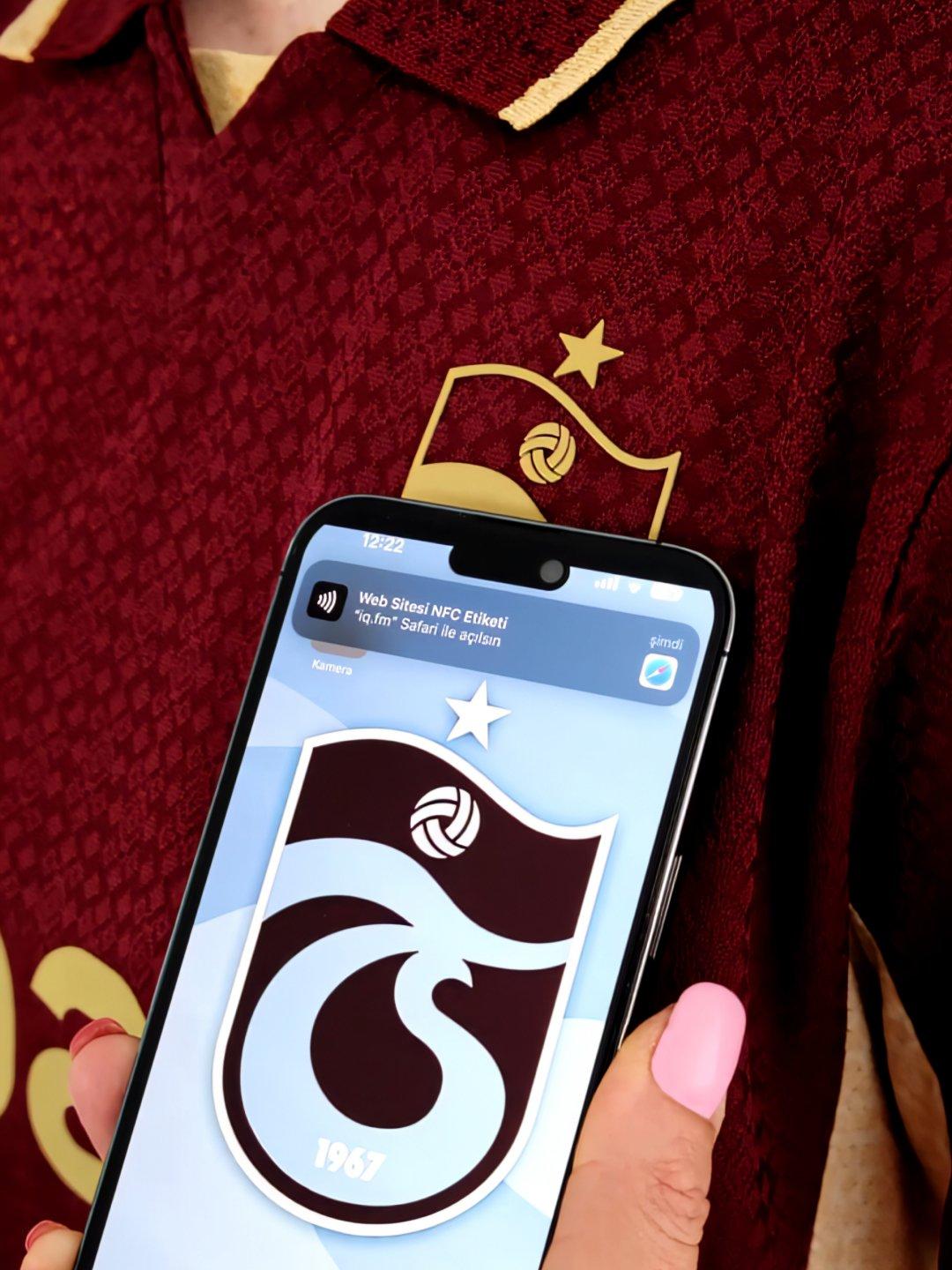

“The fact that NFC is a new form of communication, one that hasn’t been used anywhere else in the world in this way, was really appreciated by our fans. NFC technology will definitely become a new communication channel in the sports apparel industry.”
Funda Dağıstanlı
Deputy General Manager at Trabzonsport
Bringing personalization into the venue and beyond
Matchday, too, has evolved. Fans no longer come simply to watch. They come to participate, to be seen and to leave with something that feels uniquely theirs.
Across sport, this has driven a shift from traditional retail toward experience-led environments, where personalization becomes part of the moment rather than an afterthought. Supporters expect speed, quality and authenticity, delivered to the same standard whether they are purchasing inside a stadium or through an official online store.
Delivering that experience consistently is a challenge. Personalization must scale without slowing operations, increasing risk or compromising quality.
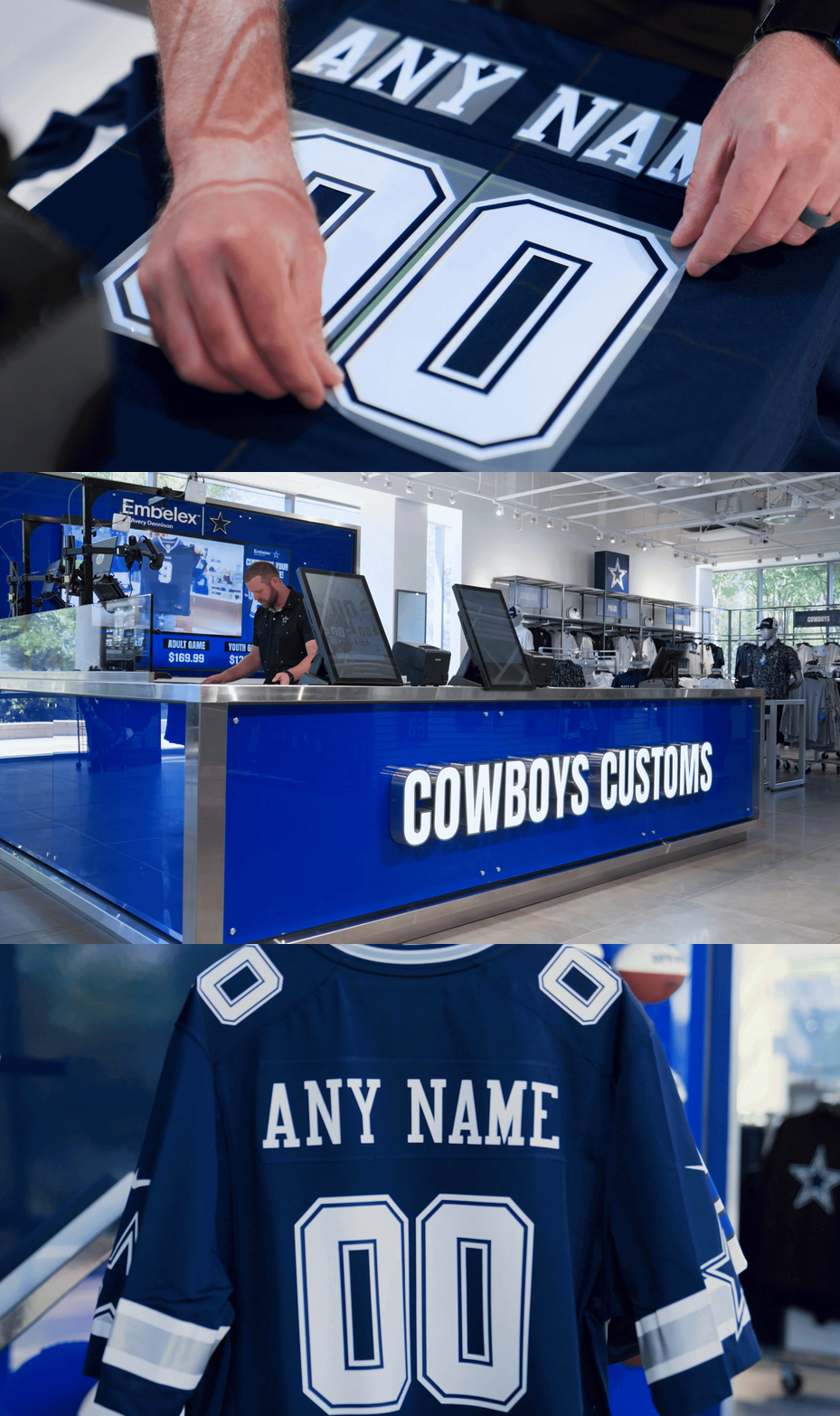
Leading organizations are responding by treating personalization as a connected capability rather than a standalone service. In-venue and event-based solutions allow fans to personalize jerseys in real time, in places that carry emotional meaning. The act of choosing a name and number and watching it come to life becomes part of the matchday memory.
At the same time, personalization increasingly extends beyond the stadium.
Direct-to-consumer models allow fans to order personalized jerseys through official e-commerce channels, with blank garments customized to the same premium standards and fulfilled directly to the fan. This approach connects online retail, personalization and delivery in a way that feels seamless for supporters, while reducing operational burden for clubs and retail teams.
When product, experience and emotion align, personalization becomes more than a transaction. It becomes part of the relationship between club and supporter.
“Fans do not just buy something. They create something. And they remember exactly where they were when they did it.”
George Dunn
Senior Retail Manager at the Dallas Cowboys
Why a holistic approach matters
Many organizations excel in individual areas, whether that is product quality, digital engagement or retail execution. The challenge lies in bringing these elements together in a way that is consistent, scalable and sustainable.
The teams and leagues setting the pace increasingly recognize that fan experience is shaped as much by operational decisions as by creative ones. Fragmented systems and multiple suppliers can introduce risk, slow execution and make innovation harder than it needs to be.
An integrated approach reduces complexity, improves execution and allows organizations to focus on delivering meaningful experiences rather than managing disconnected processes.
“Avery Dennison did not just fix one problem. They understood the entire journey, from the dressing room, to the shop floor, to the fan’s phone.”
Kim Trinidad
VP of Marketing & Operations at Golden State Warriors
Looking ahead
Sport is moving toward personalization at scale, connected merchandise, immersive retail and more responsible production. These shifts are not future ambitions. They are defining the present.
The organizations navigating this evolution most effectively are those building fan experience on integrated foundations rather than isolated initiatives. They are thinking holistically about how product, data, operations and emotion work together to drive long-term value.
This is the model being shaped in collaboration with some of the most recognized leagues and clubs in global sport. From the Premier League and Liga Portugal to leading organizations across the NFL and NBA, the direction is clear: fan experience, retail performance and operational intelligence must be designed as one connected ecosystem.
Avery Dennison partners with these organizations not simply to deliver components, but to help architect that ecosystem. Through an end-to-end platform spanning high-performance embellishments, digital connectivity, RFID-enabled inventory intelligence and personalization delivered both in venue and online, we support strategy as well as execution. Global in reach. Integrated from the outset. Built to scale.
Because in modern sport, every detail matters. And when those details are designed together, the impact is felt on the pitch, in the stands and long after the final whistle.
保持联系