
Avery Dennison’s pilot with TEXAID explored the role RFID technology could play in enhancing the scalability and efficiency of garment sorting.
Introduction
Through a joint initiative, Avery Dennison and TEXAID[1] investigated the impact of RFID-tagged garments on the textile collecting and sorting industry in Europe. The implementation of RFID technology resulted in a threefold increase in sorting throughput compared to manual sorting, while achieving identification accuracy of up to 99.9%.
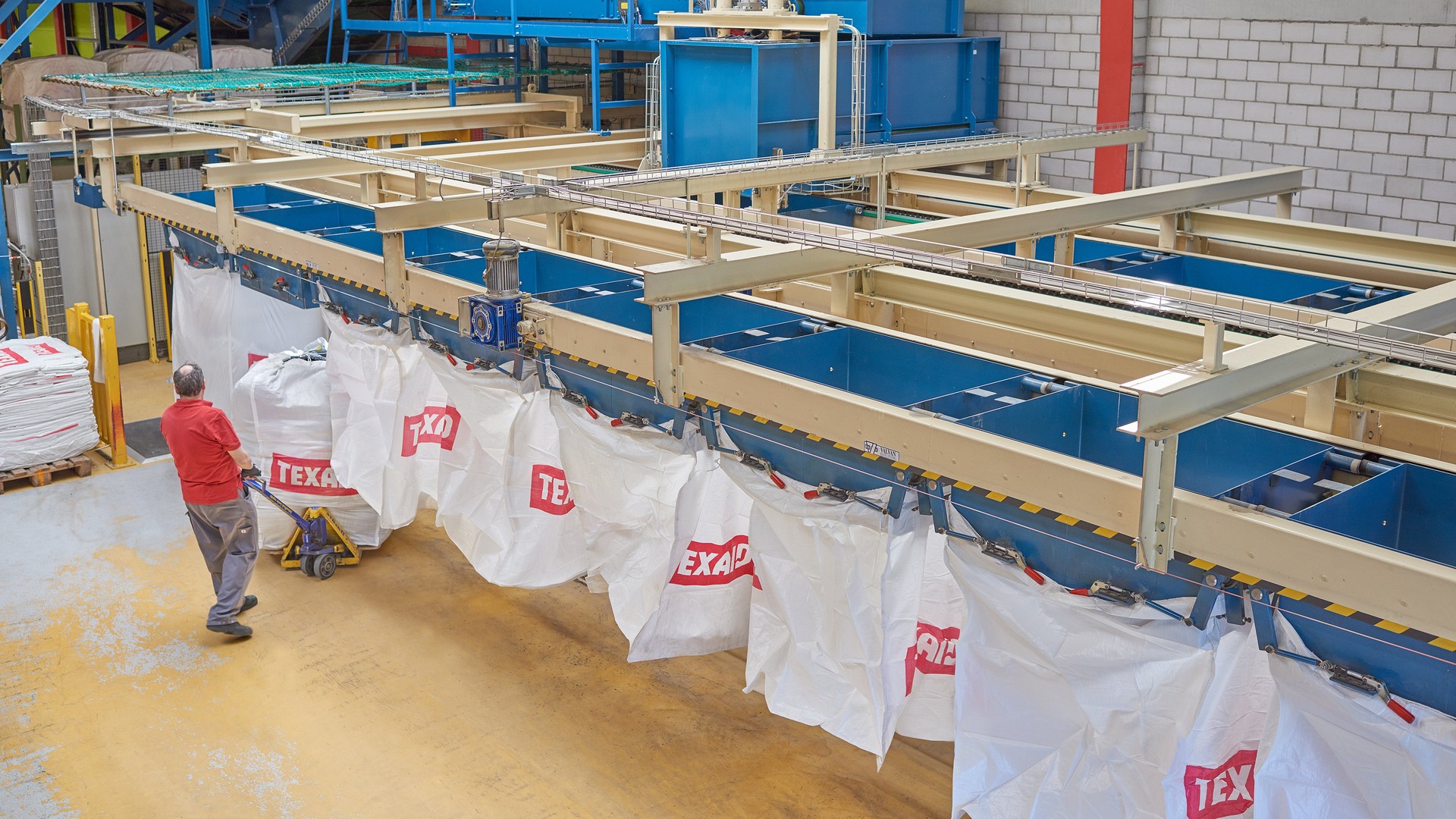
TEXAID is one of Europe’s largest textile collection and sorting organizations, handling approximately 80,000 tons of textiles every year and sorting them into over 300 categories.
With growing volumes of textile waste directed to separate textile collection, and the urgent need for recycling capacity, the build-up of data-based sorting capacity will be crucial.
New EU Waste Framework Directive mandated separate textile waste collection in EU member states from 2025 on, which increased the volumes of post-consumer waste for collectors and sorters. As the EU’s planned Digital Product Passport (DPP) legislation for textiles approaches, one way forward is for apparel brands to invest in embedded RFID technology, unlocking benefits across the value chain, from inventory management and theft prevention, to automated sorting and management of end-of-life pathways.
Challenge
Sorters face challenges in directing textile waste to recycling because existing manual sorting processes focus on identifying items predominantly for reuse but are insufficient for effective fiber-based textile-to-textile recycling. Ongoing uncertainty in the legislative landscape, combined with an unproven business case and missing incentives, has delayed investment decisions for automated sorting infrastructure. To better understand the benefits of RFID in textile sorting, Avery Dennison joined forces with TEXAID to map out the current and future EU landscape of post-consumer textile waste and how the rollout of RFID-tagged garments will impact future sorting operations.
The pilot project tested whether automated systems could accurately read RFID tags on garments and whether this could reduce the time required for sorting. Instead of relying on manual visual checks such as brand, color, or garment type, the project examined how reliably RFID data could be scanned and used by machinery. This helped clarify the potential benefits of RFID-enabled automation for faster and more accurate end-of-life textile sorting.
Solution
Implementing RFID technology alongside Near-Infrared (NIR) sorting and Artificial Intelligence (AI) has the potential to create a hybrid intelligent sorting system that can improve sorting efficiency and accuracy as compared to today’s sorting that heavily relies on manual labour.
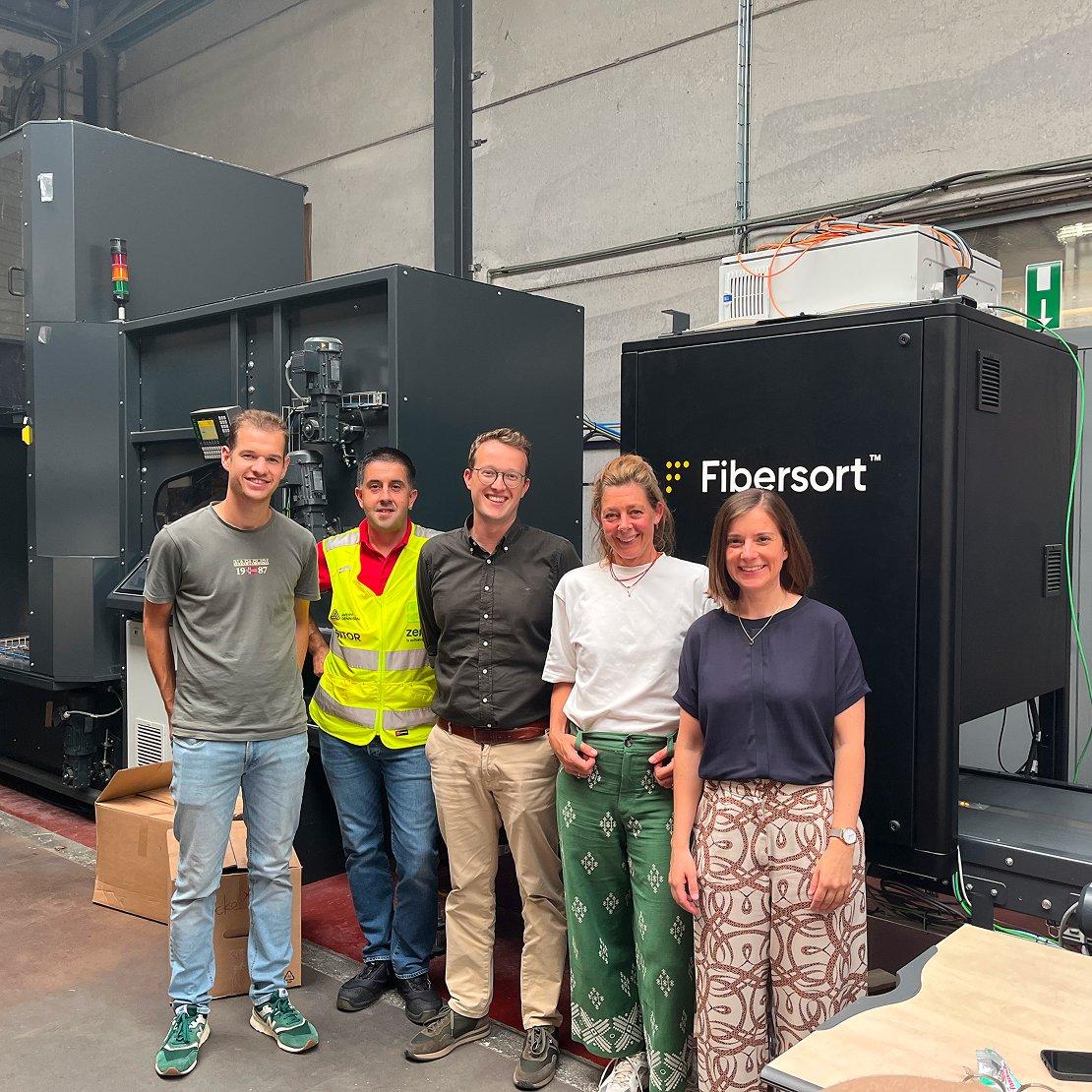
In collaboration with Valvan[2], a leading producer of sorting machines, the pilot used Valvan’s existing Fibersort®[3] technology, incorporating 300 selected garments tagged with unique Avery Dennison RFID labels. TEXAID provided a database of the RFID-tagged garments, covering diverse product categories and materials. Trials of the technology took place at Valvan's Sorting Lab in Menen, Belgium in 2025. The existing infrastructure was upgraded with scanning software and hardware from Avery Dennison, and the testing was conducted based on real-world scenarios.
Data was analyzed to assess how accurately and efficiently garments could be identified using RFID technology. Data analytics also helped optimize machine settings, such as conveyor speed and garment spacing, in readiness for scalability. The accuracy of garment identification as items passed the RFID ‘read point’ was also measured.

Results
This collaborative effort between TEXAID and Avery Dennison successfully demonstrated the seamless integration of RFID technology with the Valvan Fibersort®. The project signals a major leap forward in circular textile processing, highlighting collaboration as a direct catalyst for integrated smart sorting solutions.
The RFID-enabled system delivered measurable improvements in both throughput and accuracy. Processing capacity increased significantly while maintaining up to 99.9% accuracy in item identification, even for challenging materials such as black garments or mixed-fiber products that traditional technologies struggle to categorize.
Ultimately, the digital trail created by RFID tags provided higher visibility into material flows, enabling better material flow tracking and, consequently, more efficient and detailed reporting that can be provided to brands and retailers about the end-of-life journey of their products.
The efficiency improvement for automated RFID-enabled sorting is defined by the speed at which processing can be carried out.
Based on the collaborative pilot work carried out, it was observed that a single manual sorter can process around 2,400 kg of textiles per day or roughly 22 garments per minute (based on 4.4 items per kg).
By comparison, an automated RFID-enabled system sorts at one garment per second, or 60 garments per minute.
In simple terms, when it comes to sorting for recycling, the automated platform is almost three times more efficient than manual sorting, with manual operations achieving only about one-third of the throughput per minute.
One conclusion was that unleashing the Fibersort® machine's full potential would necessitate investments in enhanced AI cameras and more robust data management, which are not presently aligned with market demands. Nevertheless, RFID has demonstrated its effectiveness in accelerating quantifiable and data-driven sorting. Clearly, further optimization is achievable through refinements to hardware and software configurations.

Most importantly, the pilot demonstrated that RFID-driven sorting offers a scalable pathway to large-scale processing of post-consumer textiles while generating the detailed material data essential for textile-to-textile recycling.
“As DPP approaches, brands must invest in embedded RFID technology – unlocking benefits across the value chain, from inventory management and theft prevention to automation sorting and end-of-life services.”
Martin Böschen
CEO, TEXAID
Download Avery Dennison’s White Paper: RFID for Circularity here.