Exploring the Future of Connected Fashion
What if the most powerful ticket in sports…
was already hanging in your closet?
Picture this.
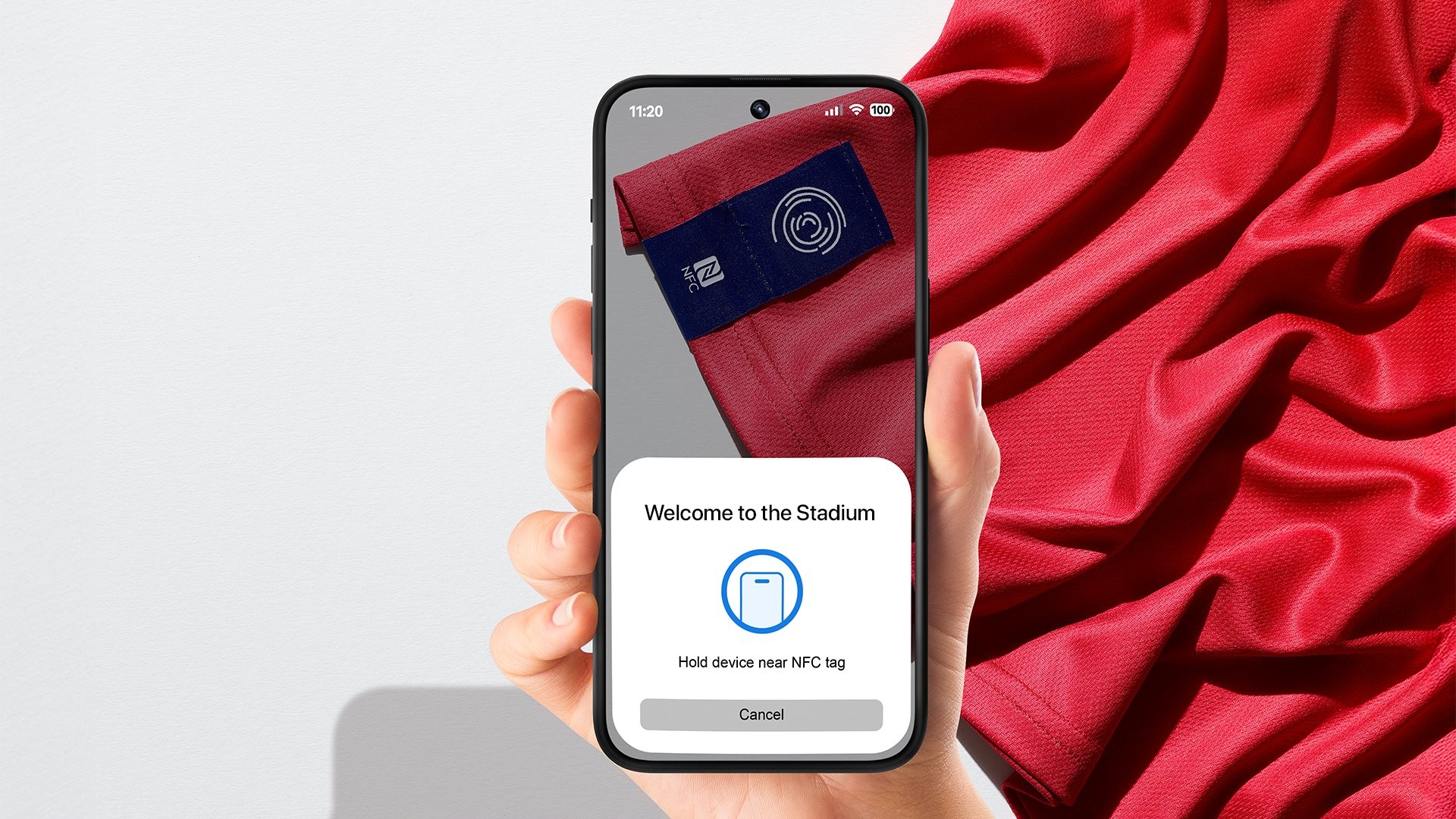
You arrive at the stadium wearing your team jersey. The colors. The crest. The feeling of belonging.
At the entrance, there is no ticket to scan. No QR code. No app to open.
Just a simple gesture.
You tap the jersey with your phone.
The gates open.
Your jersey is the season ticket.
This wasn’t a futuristic prototype. At an exclusive event hosted with @Mercury13 and @FC Como Women, guests received tailored jerseys embedded with #NFC technology. With a single tap, the garment unlocked exclusive digital content—and even served as access to the game itself. In that moment, something subtle but powerful happened.
The jersey stopped being merchandise.
It became an experience.
And perhaps more importantly, it became a bridge between the physical and digital world of fandom.
Loading
When Creativity Meets Technology
Sports jerseys have always carried stories.
Victories. Legends. Communities.
But something new is emerging: the jersey itself is becoming interactive.
Embedded NFC technology transforms apparel into a connected platform. A tap can unlock exclusive content, behind-the-scenes footage, player interviews, or special experiences reserved for fans.
Suddenly the product is no longer the end of the journey.
It becomes the beginning of a relationship.
And that shift extends far beyond sports.
Because we are witnessing the rise of connected products.
When Products Start Talking
For decades, products were silent.
Once purchased, they disappeared from the brand’s world.
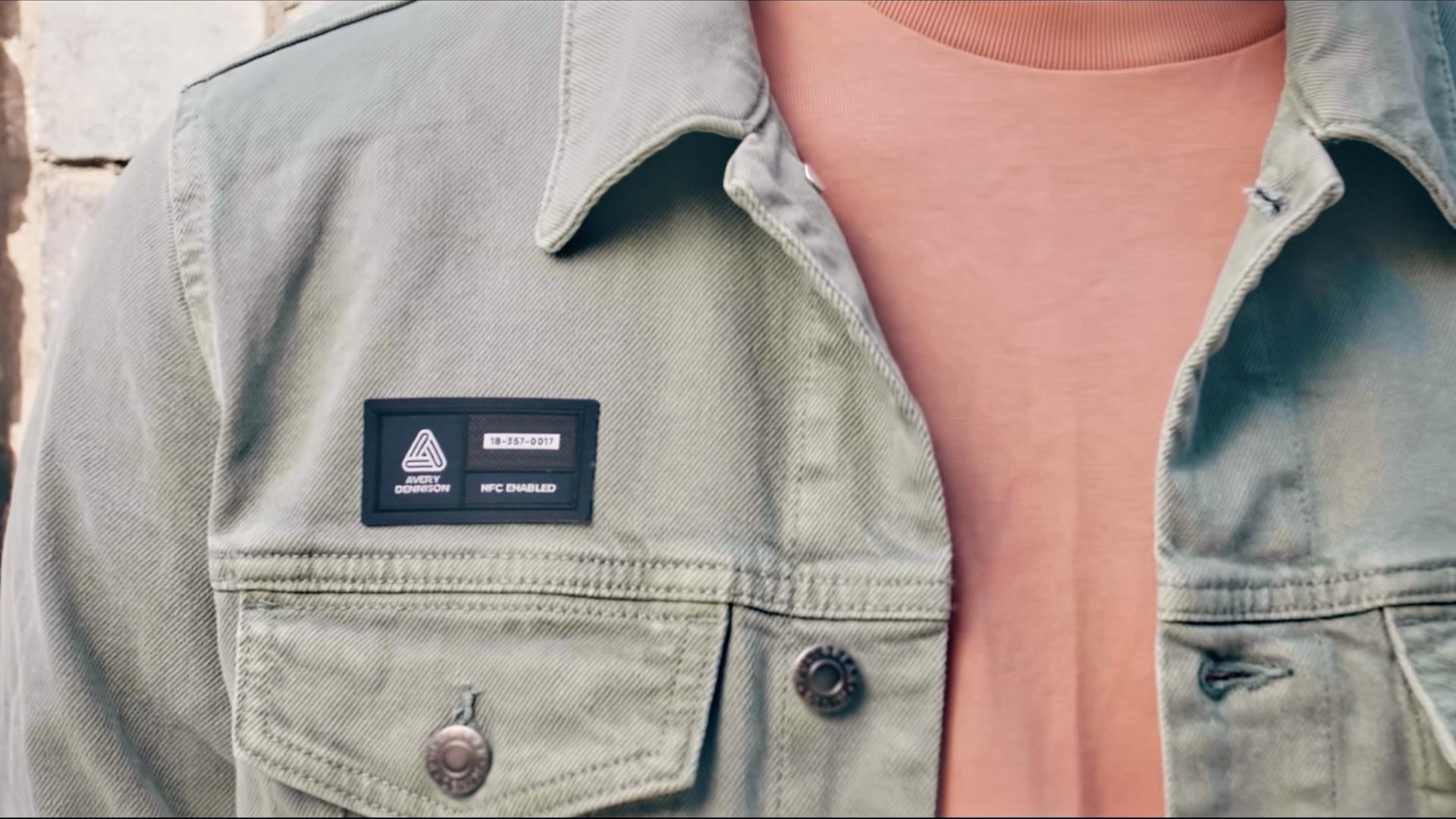
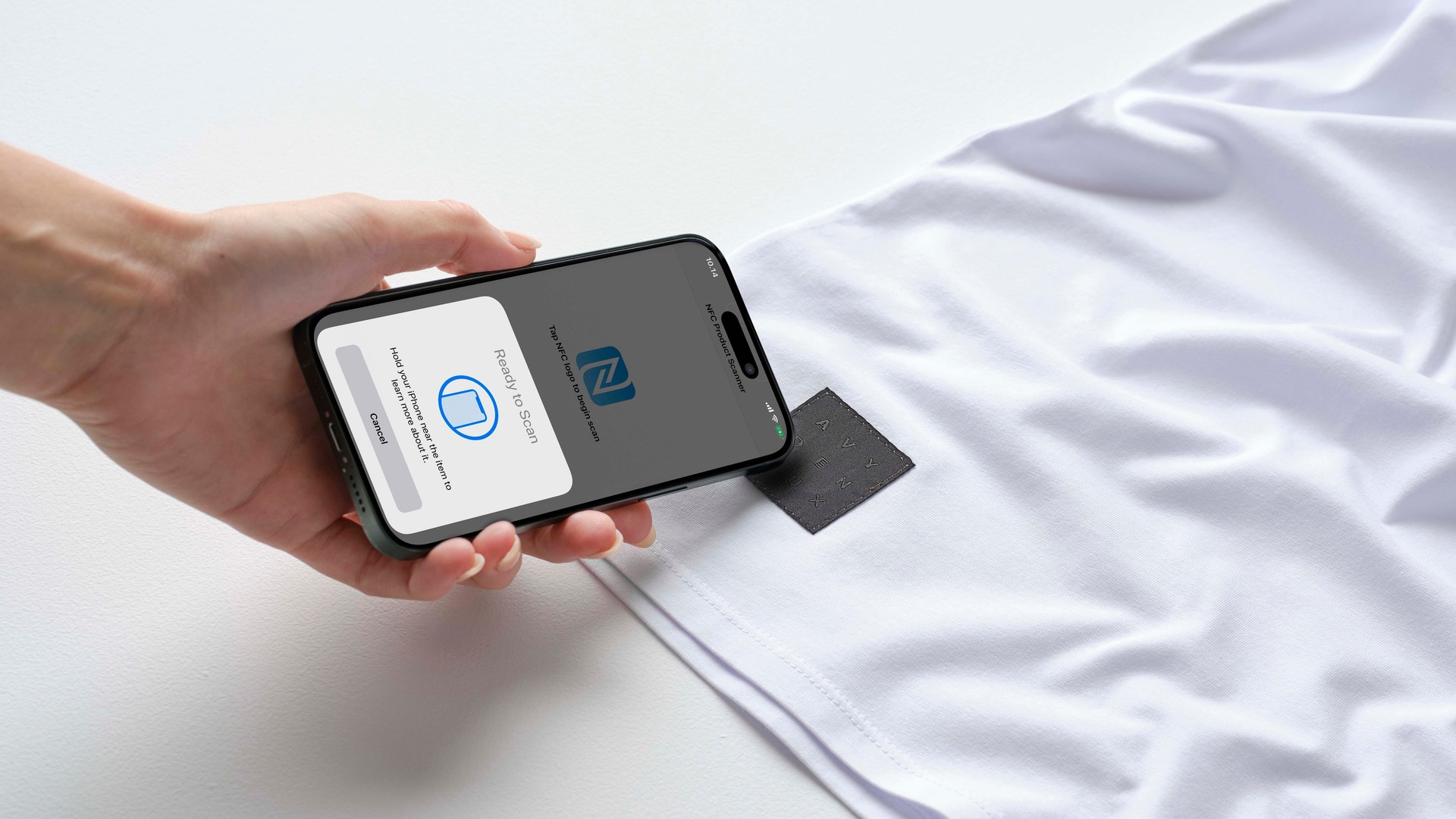
Technologies like #RFID and NFC are changing that. Every garment can now carry a digital identity,embedded invisibly inside the label—or directly into the garment, such as AD TexTrace
That identity connects the physical product with digital services, data, and experiences.
In other words:
The product can finally speak.
And the scale of this transformation is already visible.
Today, more than 60% of major fashion retailers have adopted RFID, primarily to improve visibility across their supply chains. @Statsmarketresearch
Retailers implementing RFID regularly achieve inventory accuracy levels between 95% and 99%, compared with roughly 65% using traditional systems.
Some companies even report sales increases of up to 5% simply by having the right product available at the right moment.
The technology is already capable. What’s changing now is how we choose to use it.
From Visibility to Imagination
RFID started as a supply-chain technology. Its original mission was simple:
know where products are.
But once every product has a digital identity, the question changes.
It’s no longer just: Where is the product?
It becomes: What can the product do?
The Mercury13 jersey gives one answer. It can become a season ticket. But the possibilities don’t stop there.
What if products could unlock exclusive communities—whether for fans, patients, or drivers?
What if they became the entry point to services, guidance, or ongoing care?
What if they could verify authenticity, ensure safety, or guide us toward smarter, more sustainable decisions?
When Every Product Becomes Connected
This activation was just the beginning.
Not just of a series of events—but of a shift in how we think about products themselves.
Because if a jersey can become a season ticket, it raises a much bigger question:
What happens when every product becomes connected—and identifiable?
The Mercury13 jersey is a powerful example—but it is only one expression of a much larger transformation.
Across industries, RFID and connected product technologies are quietly reshaping how physical objects behave, communicate, and create value.
In healthcare, connected products move beyond tracking toward supporting care—ensuring authenticity, guiding usage, and improving patient safety.
In automotive, components like tires become data carriers—tracking lifecycle, performance, and sustainability.
In retail, real-time product intelligence is transforming stores into intelligent environments, enabling everything from instant inventory visibility to frictionless shopping.
Across all these industries, a common layer is emerging:
RFID is becoming the invisible infrastructure connecting the physical and digital worlds—whether it’s a garment unlocking experiences, a medical product ensuring safety, or a tire carrying its lifecycle data.
And as products become increasingly connected, this infrastructure is no longer optional—it becomes inevitable.
Because when infrastructure becomes invisible, experience becomes everything.
When every product becomes digitally identifiable, we move toward something much bigger:
Not just a world where garments have digital twins—
But a world where every physical product carries a persistent digital identity.
An identity that follows it from production to use—and beyond, into maintenance, resale, and recycling.
And when that happens, something fundamental shifts.
And when that happens, something fundamental changes.
Products evolve.
They stop being static objects.
They become intelligent, connected platforms.
Beyond Technology
The jersey experiment was not really about NFC.
It was about reimagining the relationship between people and what they wear.
In sports, that relationship is emotional. A jersey represents identity, belonging, passion.
Technology does not replace that emotion.
It amplifies it.
And that is where digital creativity finds its purpose.
Not in adding technology for its own sake.
But in creating moments that feel almost magical.
Like walking into a stadium…
with nothing but the jersey on your back.